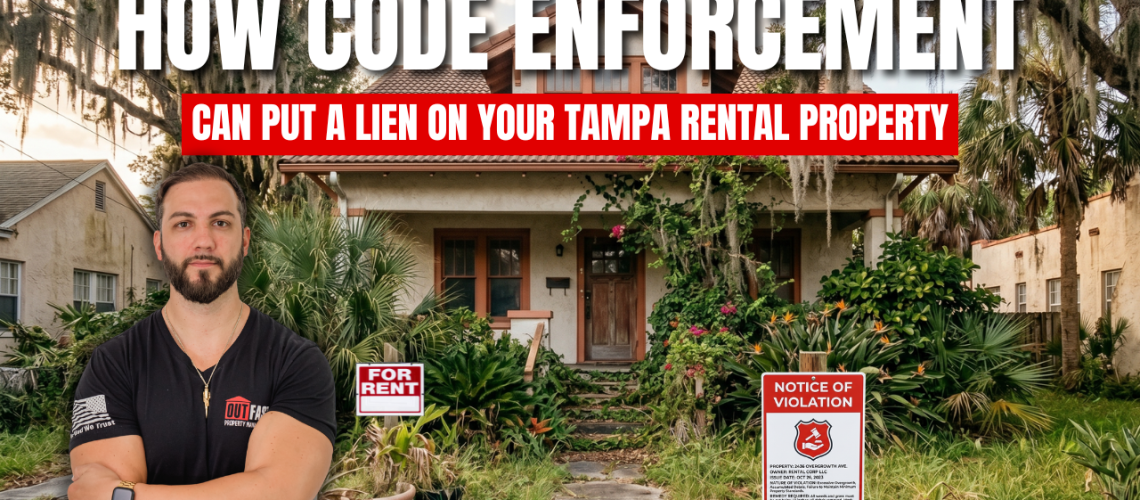
Learn how Tampa code enforcement liens work, common violation triggers, how to resolve active violations, and how landlords can avoid costly fines.
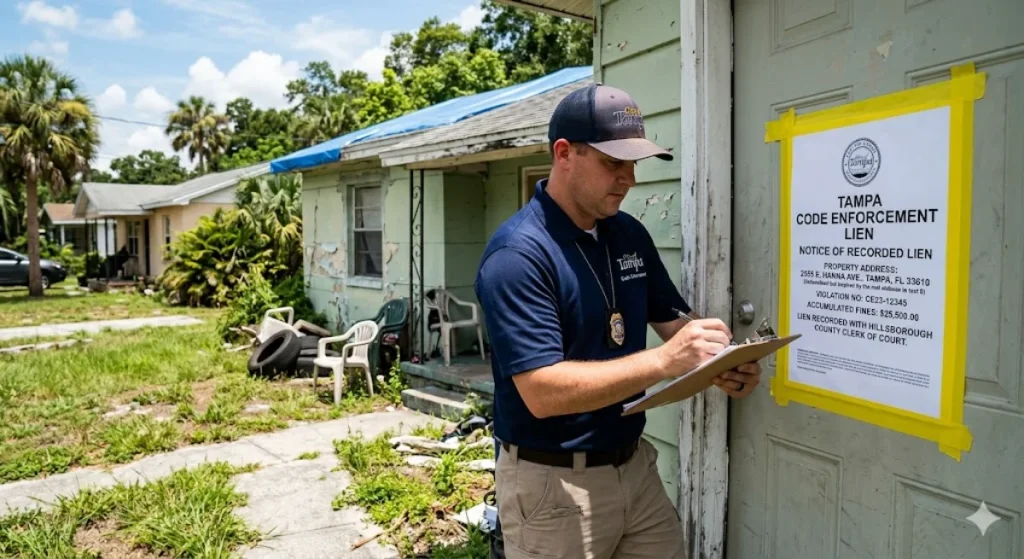
Did you know that the City of Tampa can put a lien on your property for unresolved code violations? Worse yet, these liens can grow over time, quietly turning a small maintenance issue into a much larger financial problem. When you eventually try to refinance or sell your property, these hidden traps can appear on title searches, stall your deal, and cost you a fortune. Property owners can use the official City of Tampa code enforcement lien search to check for code enforcement liens and utility balances.
As Tampa property managers, dealing with code enforcement offices is a routine part of managing rental portfolios, vacant lots, and fix-and-flip investments. If you own rental property and want fewer compliance headaches, contact Outfast Property Management to talk through your rental property needs.
Whether it is an overgrown lawn on a vacant piece of land, an unmaintained swimming pool, or a blue tarp stretching across a roof because an owner is short on cash, code compliance is a moving target. For more landlord education, visit the Outfast Property Management blog.
Here is exactly how Tampa code enforcement liens work, how to resolve them, and what property owners need to know to stay out of hot water.
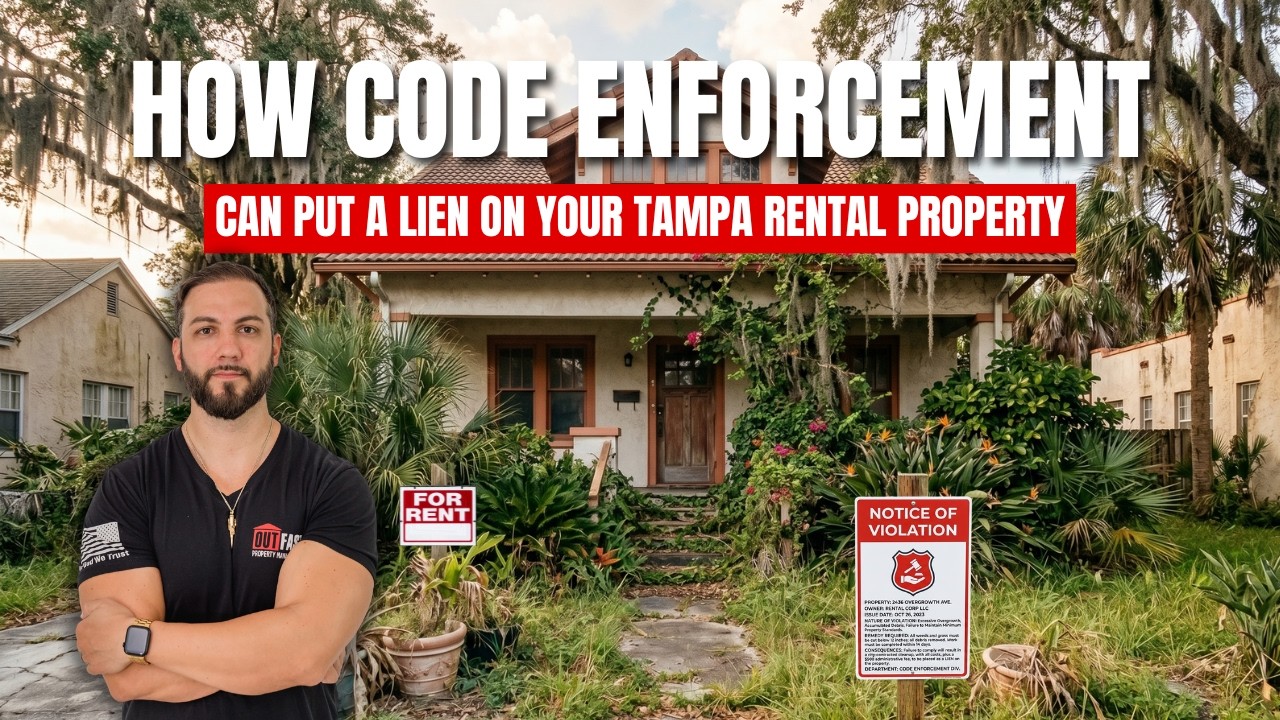
Watch this quick breakdown of how Tampa code violations can turn into liens and what property owners can do to avoid costly compliance problems.
Opens securely on YouTube.
Code enforcement liens can become title issues. If you are buying, selling, refinancing, or inheriting property, check for open code cases and recorded liens early in the process.
Common Triggers for Tampa Code Violations
Code enforcement violations do not just happen on commercial properties. They frequently target standard residential rentals. They are usually triggered by a city inspector driving by, a complaint from a neighbor, or even a call from your own tenant. The City of Tampa also provides an official code enforcement violations and complaint resource for reporting neighborhood code concerns.
Some of the most common violations we see in the Tampa Bay area include:
| Violation Type | What It Usually Looks Like | Owner Risk |
|---|---|---|
| Overgrowth and landscaping | Tall grass, unweeded driveways, or unmaintained vacant lots. | Repeat notices, fines, and forced cleanup costs. |
| Stagnant pools | Swimming pools that are neglected, turning dark green or black. | Health and safety complaints, mosquito issues, and urgent vendor costs. |
| Unregistered vehicles | Flat tires, expired tags, or inoperable cars sitting in the driveway. | Tenant enforcement issues and possible towing coordination. |
| Debris and accumulation | Junk by the road, discarded furniture, or trash near dumpsters. | Cleanup costs, repeat inspections, and neighborhood complaints. |
| Structural and exterior issues | Rotting soffits, missing siding, broken windows, roof damage, or long-term roof tarps. | Escalating repairs, permit issues, and possible code board hearings. |
Structural issues can also trigger complaints. Tampa’s official structural violation complaint resource lists examples such as peeling paint, broken windows, roof damage, and abandoned properties. Review the City of Tampa building and structural violation complaint page for more context.
The Code Enforcement Timeline: From Warning to Daily Fines
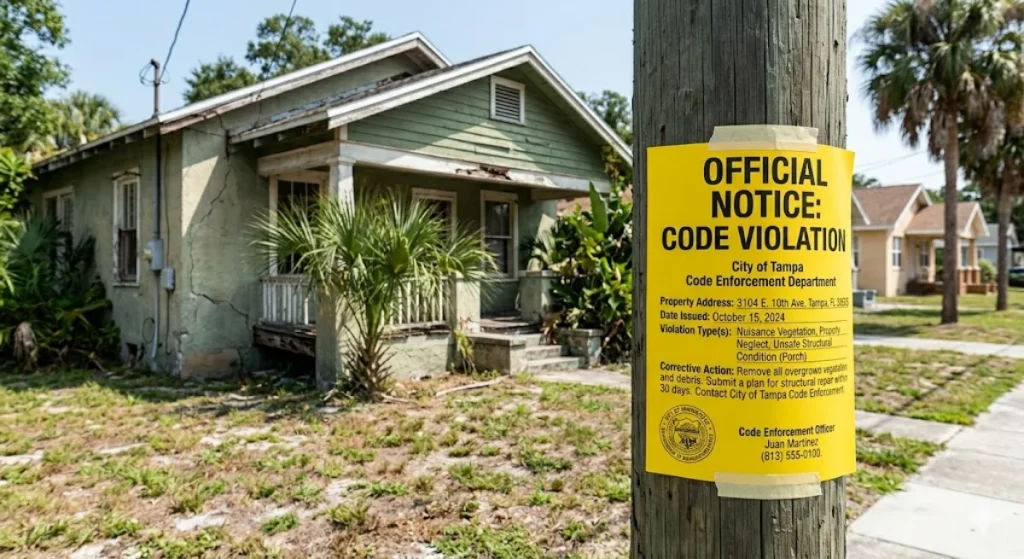
When a violation is flagged, the city will usually mail a notice to the property owner or post it physically on the property.
Generally, you have a tight window to solve the issue before things escalate. The exact timeline depends on the severity of the violation, the local process, and whether the issue creates a health or safety concern.
If you fix the issue within the grace period, the inspector can re-inspect and clear the violation. However, if you let it drag on, the city may issue a secondary notice and eventually escalate the issue to a code enforcement board or special magistrate process.
If you let a violation drag on, the issue may eventually escalate to fines or liens. Florida law gives local governments authority to impose code enforcement fines and liens in certain situations. For statutory context, review Florida Statute § 162.09.
The Danger of the “Can of Worms” Tenant Complaint
Property maintenance is not just about preserving your asset. It also helps keep you out of the city’s crosshairs. If a tenant feels that a major repair is taking too long, they may call code enforcement out of frustration.
We recently managed a property where a major plumbing issue required an $8,000 repair. Because the tenant grew impatient, they called code enforcement to the property. Once an inspector is on-site, they usually will not just look at the one complaint. They may evaluate the visible condition of the property as a whole.
In that case, the inspector added a few extra exterior violations, such as fixing a soffit and removing tree limbs. While it only cost an extra $300 to $500 to resolve those minor extras, it serves as a crucial reminder: keep your tenants informed and stay on top of standard maintenance requests so you do not open a costly can of worms.
Strong resident communication can reduce escalation. A simple update, timeline, or vendor appointment confirmation may prevent a frustrated tenant from calling code enforcement.
How to Handle and Resolve Active Violations
If you receive a violation notice in the mail, do not panic, but do act quickly. Follow this framework to resolve the issue smoothly:
Call or email the officer listed on the violation notice. If you show that you are actively working toward compliance, you may be able to request additional time.
If the tenant caused the issue, use your lease process to hold them accountable for violation costs, vendor charges, and administrative fees where allowed.
If a deadline is looming, do not wait. Dispatch a vendor to resolve the problem and document everything.
Because a short compliance timeline flies by, you cannot afford to wait around for a stubborn tenant to fix the problem. If a deadline is looming and the tenant has not complied, we immediately dispatch a preferred vendor to resolve the issue and bill the cost back to the tenant’s ledger when appropriate under the lease.
Investor Insider: How to Negotiate Existing Liens Down
If you are a real estate investor driving for dollars or buying distressed Tampa properties, code enforcement liens can actually become part of your negotiation strategy.
Years ago, we purchased a property burdened with thousands of dollars in compounding code enforcement liens. Because we were new buyers coming in with a concrete plan to rehabilitate the property and bring it back into compliance, we petitioned the city for a fine reduction.
We successfully negotiated thousands of dollars in liens down to just a few hundred bucks. If you are buying a property with existing code enforcement liens, do not let the large numbers scare you off before researching your options. Hillsborough County provides an official process to apply for a code enforcement lien settlement when a property has an existing lien.
Hillsborough County provides an official process to apply for a code enforcement lien settlement. If you own or are buying a property with a lien, start by verifying the case, lien status, and settlement options through the county’s official resources.
Summary for Tampa Landlords
Managing code enforcement is an inevitable hurdle of owning rental real estate, but it does not have to ruin your cash flow. Keep open lines of communication with city inspectors, maintain your properties to avoid tenant retaliation, and ensure your lease agreements protect you from tenant-caused violations.
Need help keeping your rentals compliant? Managing tenants, vendors, and city code inspectors can be a full-time headache. Reach out to our professional property management team today to learn how we keep your investments profitable and out of hot water with the City of Tampa.
Need Help Keeping Your Tampa Rental Compliant?
Outfast Property Management helps Tampa Bay landlords handle tenants, vendors, inspections, maintenance coordination, and code compliance issues before they become expensive problems. Explore more owner education on our
property management blog
or
contact our team
for help with your rental property.
Frequently Asked Questions

