

For Tampa Bay renters and owners alike, few questions come up more often than: how much can a landlord raise rent in Florida? The short answer surprises a lot of people. Florida is a no-rent-control state, which means there is no statewide cap on the dollar amount or percentage of an increase. But “no cap” does not mean “no rules.” Timing, notice, lease terms, and anti-retaliation protections all shape when and how rent can legally go up.
This 2026 guide explains Florida’s rent increase laws in plain English – what landlords can do, what they cannot, and how the notice rules work for both fixed-term and month-to-month tenancies.
This article is general information current as of July 2026 and is not legal advice. Florida law can change and local rules may apply. For guidance on a specific situation, consult a Florida attorney or a licensed property manager.
Does Florida have rent control? No – and here’s why that matters
Florida has effectively banned local rent control for decades, so there is no statewide or municipal cap on how much rent can be raised for most residential properties. That means the amount of an increase is set by the market and the lease – not by a government formula like you would find in some other states.
What Florida law does regulate is the process: how much notice is required, when an increase can take effect, and the reasons a landlord may not raise rent. Get the process wrong and an otherwise legal increase can be unenforceable.
This is Out Fast’s dedicated guide to rent increases. For the broader picture of your rights and obligations, see our Florida landlord-tenant law overview, which links here for the rent-increase details.
Fixed-term leases: rent is locked in (usually)
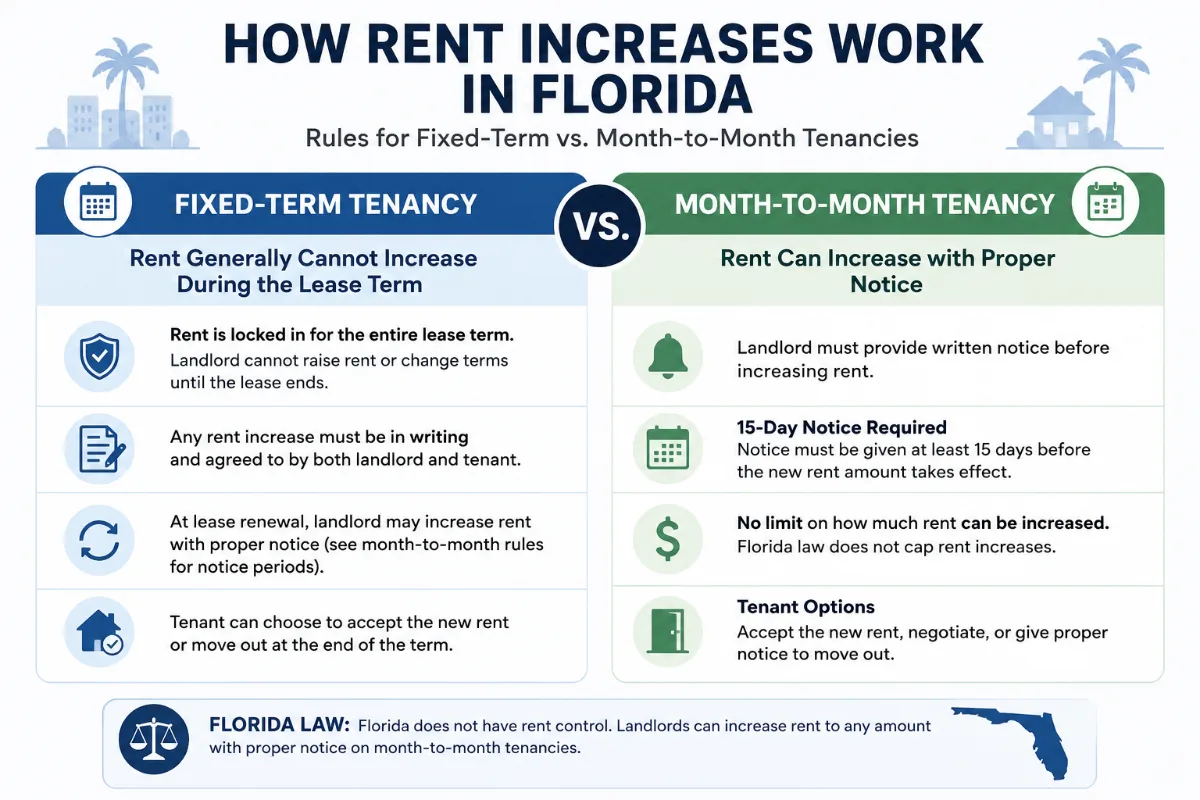
If you have a fixed-term lease – say a standard 12-month lease – the rent is generally locked for that entire term. A landlord cannot raise the rent mid-lease unless the lease itself contains a specific clause allowing a mid-term increase (which is uncommon in residential leases).
When the term ends, the landlord may propose a new rent for a renewal or a new lease. At that point you can accept, negotiate, or decline and move out. Always read the renewal and notice clauses in your own lease, because they can set stricter terms than the statutory minimum.
Month-to-month tenancies: the 30-day notice rule
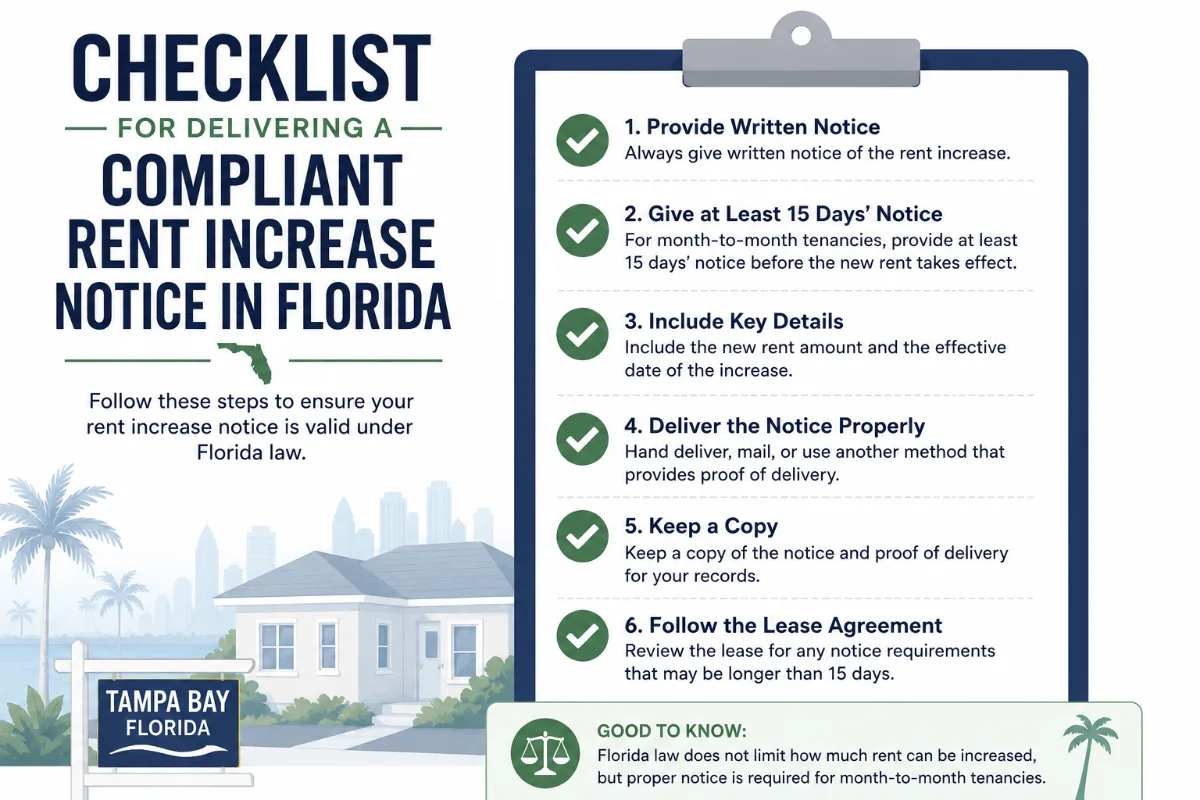
For a month-to-month tenancy, the landlord can change the rent for an upcoming period, but must give proper advance written notice. Under Florida Statutes Section 83.57, ending or changing a month-to-month tenancy requires at least 30 days’ written notice before the end of the monthly rental period. A practical rule of thumb: deliver the rent-increase notice in writing, keep proof of delivery, and make the new rate effective no sooner than the next full rental period after the notice window.
Verbal rent increases invite disputes. A clear written notice that states the new amount and the effective date protects both the owner and the tenant, and it is what the statute contemplates for month-to-month tenancies.
What a landlord cannot do: discrimination and retaliation
No rent control does not mean no limits. Two big ones:
Fair housing. A landlord may not raise rent (or treat tenants differently) based on a protected class such as race, color, national origin, religion, sex, familial status, or disability.
Retaliation. Under Florida Statutes Section 83.64, a landlord may not raise rent in retaliation – for example, because a tenant complained to a code-enforcement or health agency, joined a tenants’ organization, or exercised a legal right. A retaliatory increase can be challenged.
And an increase is not a tool for forcing someone out outside the rules. If a tenancy needs to end, the lawful path runs through proper notice and, if necessary, the Florida eviction process – not a punitive rent spike.
How owners should handle rent increases the right way
For Tampa Bay owners, a defensible rent increase comes down to three habits: know your number, give proper notice, and document everything.
- Know your number. Price to the current market, not a guess. A free rental analysis shows what comparable Tampa Bay homes actually command.
- Give proper notice. Honor the lease terms and the statutory 30-day minimum for month-to-month tenancies.
- Document everything. Written notice, proof of delivery, and a clear effective date. (Good documentation also protects you on related issues like the Florida security deposit law.)
A modest, well-timed increase that keeps a good tenant in place often beats a steep one that triggers a costly turnover. And remember the management side of the math: what property managers charge in Florida is usually a percentage of collected rent, so a fair, market-rate increase benefits everyone aligned with keeping the property performing.
Out Fast Property Management keeps Tampa Bay owners compliant and competitive – from market-rate pricing to legally sound notices. Request a free rental analysis to find the right rent for your property.
This guide is general information, current as of July 2026, and not legal advice. Consult a Florida attorney for advice on your specific situation.
Frequently Asked Questions
How much can a landlord raise rent in Florida?
There is no statewide cap on how much a landlord can raise rent in Florida and no state rent control. A landlord may raise rent by any amount as long as it is not done for a discriminatory or retaliatory reason and the proper notice and timing rules are followed.
Does Florida have rent control?
No. Florida has effectively prohibited local rent control for decades, so there is no statewide or local cap on rent increases for most properties. The market – not a government formula – sets the limit on how much rent can go up.
How much notice must a Florida landlord give to raise rent on a month-to-month tenant?
For a month-to-month tenancy, Florida Statutes Section 83.57 requires at least 30 days’ written notice before the end of the monthly period to change the terms, including raising the rent. A landlord generally cannot raise rent in the middle of a fixed-term lease unless the lease itself allows it.
Can my landlord raise my rent during a lease in Florida?
Generally no. During a fixed-term lease, the rent is locked in for the term unless the lease contains a clause that permits an increase. When the lease ends or renews, the landlord may propose a new rent with proper notice.
Can a landlord raise rent as retaliation in Florida?
No. Under Florida Statutes Section 83.64, a landlord may not raise rent (or otherwise retaliate) because a tenant complained to a government agency, joined a tenant organization, or exercised a legal right. This article is general information, not legal advice.


