
Tampa has quietly become one of Florida’s strongest short-term rental markets. Steady tourism, a busy convention and sports calendar, proximity to Gulf beaches, and neighborhoods like Ybor City, Seminole Heights, and the waterfront near downtown all draw guests year-round. For owners, that demand is an opportunity – but running a successful Airbnb here is a real hospitality business, not a passive side income. This 2026 guide explains how Airbnb management in Tampa works: the local rules, what a manager does, what it costs, and how short-term returns compare to a traditional lease.
Short-term rental rules change often and vary by city and county. This article is general information, not legal or tax advice – confirm the requirements for your specific Tampa Bay address with the relevant authorities or a licensed professional.
First, understand Tampa’s short-term rental rules
Florida’s short-term rental landscape is a layered one, and Tampa is no exception. Regulation comes from three levels, and all three can apply to the same property:
- State: Florida regulates vacation rentals through the Department of Business and Professional Regulation (DBPR), which issues a state vacation-rental license, and through the Department of Revenue for tax registration. The framework lives in Florida Statutes Chapter 509.
- County: Hillsborough and Pinellas counties have their own registration, tourist-development-tax, and (in some areas) zoning considerations. Unincorporated county rules can differ from the cities within them.
- City: The City of Tampa – and separately, cities like St. Petersburg, Clearwater, and the beach communities – may require a local business tax receipt, registration, or have specific standards.
The practical takeaway: two homes a few miles apart can face different rules. Before you list, verify what applies at your exact address. A good local manager does this as step one.
A property in the City of Tampa, one in unincorporated Hillsborough County, and one on a Pinellas beach can each face different licensing, registration, and tax obligations. Never assume a rule you read about one Tampa Bay area applies to yours.
What a Tampa Airbnb management company actually does
“Management” for a short-term rental means running a small hospitality operation. A full-service Tampa short-term rental manager typically handles:
- Listing and pricing: Professional photos, a compelling listing, and dynamic pricing that adjusts nightly rates for seasonality, events, and demand across Airbnb, Vrbo, and direct bookings.
- Guest experience: Screening, communication, check-in/check-out, and fast responses to the questions and issues that drive (or sink) your reviews.
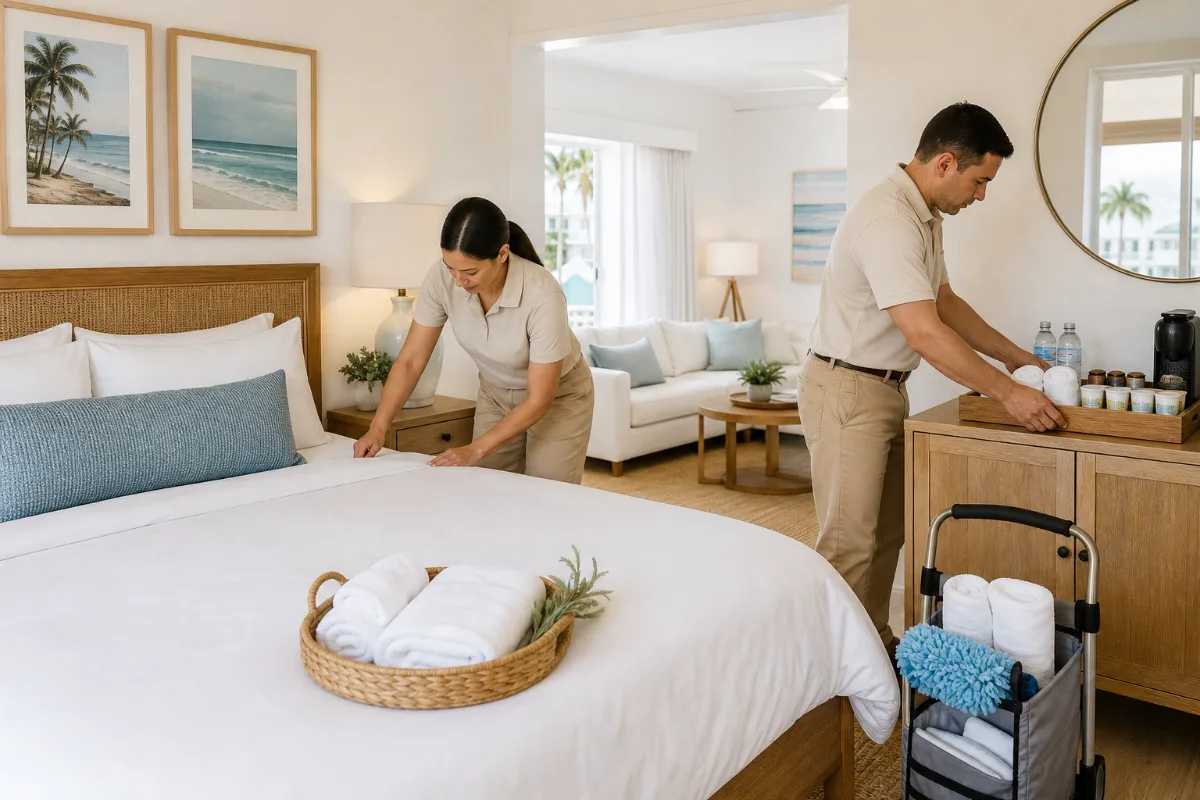
- Turnovers: Coordinating cleaning, laundry, restocking consumables, and inspecting between every stay – the operational heart of short-term rentals.
- Maintenance and 24/7 support: Handling the broken AC at 11 p.m. that a long-term tenant would simply wait on but a paying guest will not.
- Compliance and taxes: Keeping licensing current and ensuring the right state and tourist-development taxes are collected and remitted.
What does Airbnb management cost in Tampa?
Short-term management costs more than long-term for a simple reason: it is far more work. Expect full-service short-term rental management in Tampa to run roughly 20-35% of booking revenue, compared with about 8-12% of monthly rent for a standard long-term lease.
That spread reflects the volume of tasks – dozens of guest interactions and turnovers a month versus one lease a year. When comparing companies, look past the headline percentage and ask what’s included: Are cleaning and supplies billed separately? Is dynamic pricing included? Who covers guest-damage claims? Two “25%” quotes can mean very different things once the add-ons are counted.
Short-term vs. long-term: which wins in Tampa?
This is the question most owners really want answered, and the honest answer is: it depends on the property. A short-term rental can gross meaningfully more than a long-term lease – particularly for a well-located, well-run home near the water, downtown, the convention center, or the stadiums. But it also carries:
- Higher operating costs (cleaning, supplies, higher management fee, furnishing, utilities).
- Seasonality and vacancy risk – Tampa’s shoulder seasons are softer than its peaks.
- Regulatory risk – a rule change can affect the model overnight.
- More hands-on demand, even with a manager.
A long-term lease, by contrast, trades some upside for stability, lower costs, and less regulatory exposure. Many Tampa Bay owners run the numbers both ways before deciding – and some land on a hybrid, such as mid-term (30+ day) furnished rentals that sidestep parts of the short-term rules while still earning a premium. Our Tampa short-term rental investment guide walks through the ROI math in more detail.
Before you spend money furnishing a home for Airbnb, compare projected annual net income as a short-term rental (after cleaning, supplies, and management) against a straightforward long-term lease. Sometimes the “boring” option quietly wins – and sometimes the numbers make the case clearly for short-term.
Where short-term rentals perform in the Tampa area
Location drives short-term rental performance more than almost anything else, and Tampa Bay has several distinct demand pockets. Proximity to the water, walkability, and nearness to why people visit are what fill a calendar at strong nightly rates.
- Downtown Tampa, Channel District, and Water Street draw business travelers, convention-goers, and event crowds around Amalie Arena and the Tampa Convention Center.
- Ybor City and Seminole Heights attract visitors who want character, nightlife, and a walkable, local experience.
- Near the Gulf beaches (Clearwater, St. Pete Beach, and the barrier islands) leans leisure and seasonal, with strong summer and snowbird-season demand.
- Near USF, hospitals, and Busch Gardens picks up medical travel, visiting families, and longer mid-term stays.
Each of these behaves differently by season and guest type, which is why pricing and marketing can’t be one-size-fits-all. A manager who knows Tampa Bay block by block will price a Channel District condo differently from a beach cottage or a Seminole Heights bungalow – and that local nuance is often the difference between a listing that merely books and one that maximizes revenue.
Should you self-manage or hire a company?
Plenty of Tampa owners start out self-managing, and it can work if you live nearby, enjoy hospitality, and have time for the 24/7 rhythm. But the reasons owners hand it off are consistent: the operational grind of turnovers, the pressure of guest reviews, the complexity of local compliance, and the reality that an unmanaged listing quietly underperforms on both occupancy and nightly rate. A professional manager earns its fee by lifting revenue (through pricing and better reviews) and removing the workload – not just by unlocking doors.
The bottom line
Airbnb management in Tampa is about running a compliant, well-reviewed hospitality business in a market with real demand and real rules. If you understand the local licensing and tax layers, budget honestly for the higher costs, and compare short-term against long-term for your specific property, a Tampa short-term rental can be a strong performer – especially with an experienced local team handling the day-to-day.
Out Fast Property Management helps Tampa Bay owners weigh short-term versus long-term and manages both. Get a management quote and we’ll help you figure out what your property can really earn.
Frequently Asked Questions
Do I need a license to run an Airbnb in Tampa?
In most cases, yes – and often more than one. Florida vacation rentals are regulated by the state through the DBPR (a state vacation-rental license) and by the Department of Revenue for tax collection, plus city and county requirements such as a business tax receipt and local registration. Rules differ between the City of Tampa, unincorporated Hillsborough County, Pinellas County, and beach cities, so confirm the specific requirements for your address. This is general information, not legal advice.
How much does Airbnb management cost in Tampa?
Full-service short-term rental management in the Tampa area typically runs about 20-35% of the booking revenue, versus roughly 8-12% of rent for long-term management. The higher fee reflects far more work – dynamic pricing, guest communication, turnovers, cleaning coordination, restocking, and 24/7 support. Always confirm exactly what is and isn’t included.
Is a short-term rental more profitable than a long-term rental in Tampa?
It can be, but not always. A well-located, well-run Tampa short-term rental can gross more than a long-term lease, especially near the water, downtown, or event venues. But it also carries higher costs, more vacancy risk, seasonality, and stricter regulation. The right choice depends on your property’s location, your goals, and how the local rules affect your address.
What taxes apply to Tampa short-term rentals?
Short-term stays (six months or less) are generally subject to Florida sales/use tax plus the county tourist development tax (the ‘bed tax’). Platforms like Airbnb collect some of these automatically, but not always all of them – owners are ultimately responsible for making sure the correct taxes are registered and remitted. A manager or CPA who knows Hillsborough and Pinellas rules is worth having.
What does an Airbnb management company actually do?
A full-service manager handles listing creation and optimization, dynamic pricing, guest screening and communication, check-in/check-out, cleaning and turnover coordination, restocking, maintenance, review management, and compliance with local and state rules – essentially operating the rental as a small hospitality business so you don’t have to.


