
Squatters in a rental property are rare — but when it happens, the clock starts ticking immediately. Every hour you wait makes the situation harder to resolve, more expensive to fix, and more disruptive to everyone around the property. We recently dealt with exactly this scenario for one of our clients, and we want to share what happened and what we did about it.
This is not a hypothetical. This is a real case, a real vacant unit, and a real win for the owner — settled quickly, with costs limited to a few boards and some police coordination.
If you discover squatters in a rental property, do not try to confront them yourself.
Contact the non-emergency police line, secure the property once it is cleared, and post trespass notices immediately.
The longer you wait, the harder removal gets.
This particular client owns a parcel with three separate structures. Two were occupied by residents and one was sitting vacant due to needed repairs. During active leasing efforts on the vacant unit, we started hearing something unexpected from the neighboring occupied units — reports of unwanted guests next door.
That kind of tip-off is exactly why responsive communication between a professional property management company and residents matters. Our residents knew they could come to us, and we took it seriously right away.

The risk here was real. Squatters in a vacant rental unit do not just affect the property — they affect the residents living right next door. A good tenant who does not feel safe will leave. And a new applicant who shows up to tour a unit and notices problems next door may never sign a lease at all.
When our team received the report, we moved fast. Here is exactly what we did to remove squatters and secure the property without putting anyone at risk.
We dispatched a team member to do a visual assessment of the vacant unit. When they arrived, they discovered people inside. At that point, the priority shifted from inspection to safety.
Our technician did not confront the occupants. They called the non-emergency police line from the vehicle and waited safely until officers arrived. This is critical. Confronting squatters directly can escalate quickly, and it is not worth the risk to your staff or yourself.
Never try to physically remove squatters yourself.
Even if someone is clearly trespassing, self-help removal can expose you to legal liability in Florida.
Let law enforcement handle it.
Once officers arrived, they removed the individuals from the property. Because there was no established tenancy — no real lease, no payment history, no documented residency — police were able to treat this as a trespass situation rather than a civil landlord-tenant matter.
After the unit was cleared, we removed any left-behind belongings and re-secured all entry points. In this case, that meant boarding up areas where access had been gained through unsecured windows and doors. Total material cost: a few pieces of wood.
To prevent the issue from repeating, we posted official trespass notices on the property. These give law enforcement the authority to remove anyone found on the premises in the future — without needing another full call for service. It puts the property on record and creates a paper trail.
Here is what most property owners do not realize: the longer squatters stay in a rental property, the more complicated — and expensive — removal becomes.
In our case, we caught it early. The window of opportunity to handle this as a trespass — rather than a civil eviction — was still open. That saved our client time, money, and a lot of stress.
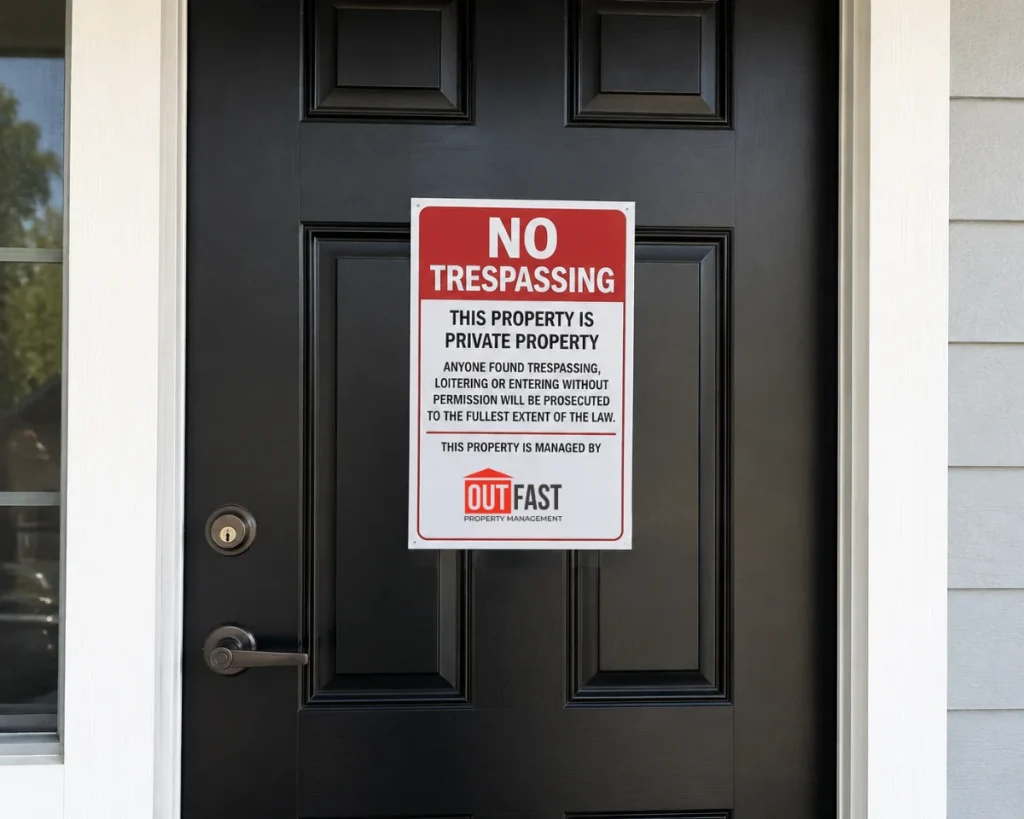
Within a short time of receiving the report, the vacant unit was back in our client’s control. We boarded up the vulnerable entry points, posted trespass notices, and notified the neighboring residents that the situation was resolved.
From there, we resumed leasing efforts on the vacant unit. We already had pending applications — and those applicants will move into a property that is safe, secured, and properly managed. The existing residents can get back to their normal lives without the anxiety of an unknown neighbor situation next door.
This outcome was possible because of fast action, professional protocols, and direct communication with law enforcement.
A self-managing landlord who is not sure what to do — or who waits too long — often ends up in a very different situation.
Certified property managers — particularly those holding designations like the Residential Management Professional (RMP®) or who are active members of the National Association of Residential Property Managers (NARPM®) — are trained to handle exactly these kinds of situations. That includes knowing when to call law enforcement, how to document the situation, what legal steps to take, and how to minimize risk to the owner and existing residents.
When a vacant unit sits unsecured, even briefly, the risk of unauthorized entry goes up. A professional property management company keeps an eye on vacant units, responds quickly to reports from residents, and has vendor relationships that allow for rapid response — whether that means a maintenance technician, a locksmith, or a boarding crew.
Self-managing a property means handling all of that yourself — including making judgment calls in real time when there are people inside a unit who should not be there. That is a stressful position to be in. It is also one that, if handled wrong, can create real legal and financial exposure.
Out Fast Property Management handles the situations that keep owners up at night — so you do not have to. Reach out today and let’s talk about what we can do for your investment.
Do not confront them directly. Have someone contact the non-emergency police line and wait safely off the property until officers arrive. Once police remove the occupants, you can secure the property and post trespass notices. Speed matters here — the sooner you act, the simpler the resolution tends to be.
Yes — in many cases, if the squatters have no documentation, lease, or established presence, police can remove them as trespassers. However, if they produce paperwork or have been there long enough to claim tenancy, you may need to go through the formal eviction process in court.
Delay is the main factor. The longer squatters are in place, the more likely they are to bring in additional belongings, produce fake lease documents, or establish enough of a presence that police treat it as a civil matter. Act fast and the situation usually stays manageable.
A professional property manager regularly inspects vacant units, maintains proper security, and responds quickly to reports from residents. They also know the correct steps to involve law enforcement calmly and efficiently — without putting themselves or others at risk.
Residents who feel unsafe may choose not to renew their lease. Acting quickly to resolve a squatter situation protects your existing residents, reduces vacancy risk, and prevents dangerous incidents like fires or break-ins that can cause far more damage than the original unauthorized entry.
Squatters are not a common occurrence — but when they show up, they test how prepared your property management operation really is. In this case, our client benefited from having a team that knew exactly what to do: send someone out immediately, get law enforcement involved the right way, secure the property fast, and document everything.
The cost? A few boards. The outcome? A safe property, protected residents, and a vacant unit now back on the leasing market with solid applicants already in queue.
If you own rental property in the Tampa Bay area and want to know your investment is being watched over by people who handle the unexpected — not just the routine — Out Fast Property Management is ready to talk.
Have questions about protecting your rental property? Contact our team — we’re happy to walk you through what professional management looks like for your specific situation.