

August marks the peak of Atlantic hurricane season, and for Tampa Bay landlords it is the single most important month to get insurance right. Our region sits low and close to the water, which means storm surge and flash flooding are the real threats – often more damaging to a rental property than wind alone. The problem most owners discover too late is simple: standard landlord and homeowners policies do not cover flood. This guide walks through how to protect a Florida rental before the next storm forms in the Gulf.
Why standard policies leave a Tampa Bay gap
A standard policy for Florida landlord insurance (often a DP-3 dwelling policy) covers wind, fire, theft, and liability. What it explicitly excludes is rising water – and that includes storm surge, an overflowing bay, and water that pools from torrential rain. When people ask does homeowners insurance cover hurricane damage, the honest answer is “partly.” Wind damage, yes. The three feet of bay water that soaked the drywall, no.
This is the coverage gap that catches Tampa Bay owners every year. If your rental is anywhere near Old Tampa Bay, the Hillsborough River, Clearwater, or the Pinellas coast, flood is not a remote risk – it is the expected one.
Flood damage from a hurricane is not covered by your regular landlord policy. Storm surge, rising water, and heavy-rain flooding all require a separate flood policy. Confirm you have one before August.
Flood vs. windstorm vs. your standard policy
Think of hurricane protection in Florida as three distinct layers:
- Standard landlord/dwelling policy – fire, theft, liability, and often wind (though coastal properties may carve wind out).
- Windstorm coverage – wind-driven damage. In high-risk coastal areas this is sometimes a separate policy or a Citizens Property Insurance policy.
- Flood insurance – rising water and storm surge, from the ground up. Never included in the other two.
A single hurricane can trigger claims on all three. Knowing which policy responds to which type of damage is what keeps a claim from being denied.
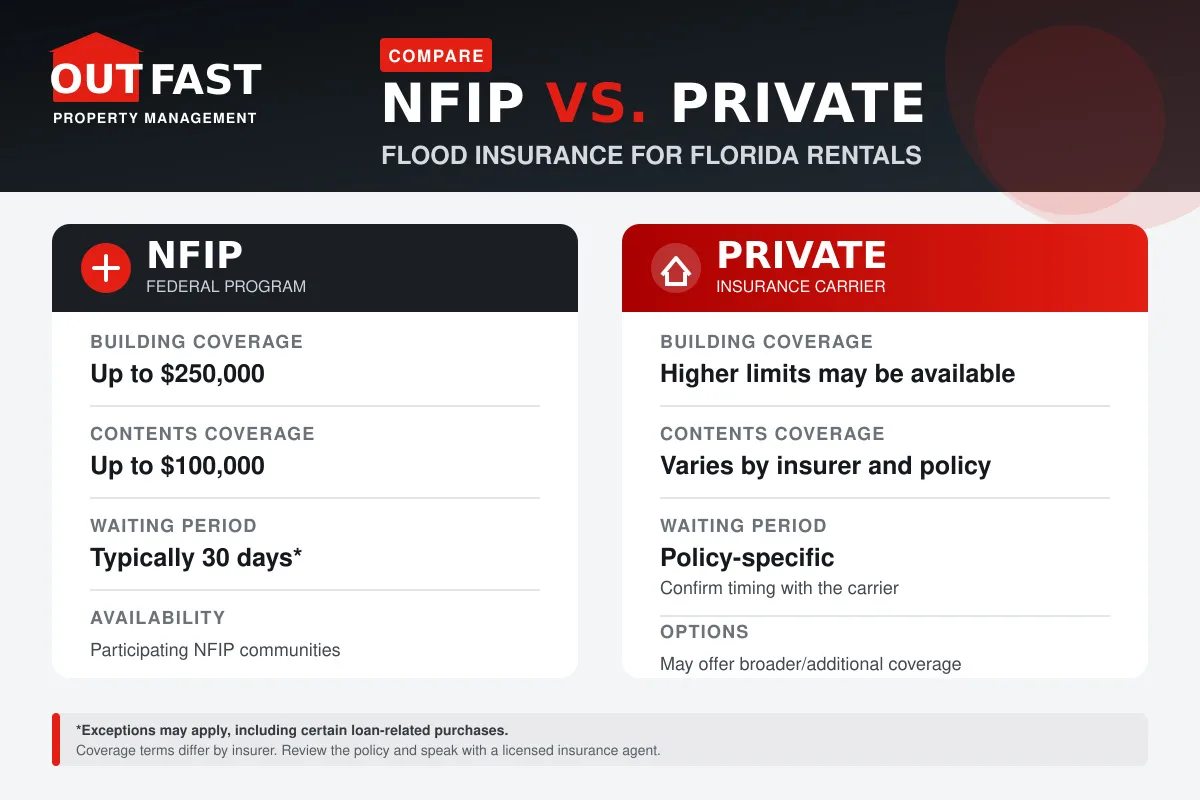
NFIP vs. private flood insurance
Most Florida landlords buy flood coverage one of two ways:
NFIP (National Flood Insurance Program). Backed by FEMA and sold through licensed agents, the NFIP is the baseline option. Building coverage for a residential rental caps at $250,000 for the structure, with contents coverage available separately. Pricing now runs on FEMA’s Risk Rating 2.0, which prices each property individually by elevation and distance to water.
Private flood insurance. A growing private market often offers higher limits, replacement-cost options, and sometimes lower premiums for well-elevated homes. For a higher-value Tampa rental that exceeds NFIP caps, a private policy or an excess-flood layer fills the gap.
What your policy excludes – read the fine print
Even with flood coverage, exclusions matter. Common ones that trip up landlords:
- Tenant belongings – your building policy never covers a renter’s furniture or electronics. That is what renters insurance is for.
- Basements and below-grade areas – NFIP sharply limits coverage below the lowest elevated floor.
- Landscaping, fences, and detached structures – often excluded or sub-limited.
- Loss of rental income – not automatic; ask about “fair rental value” or loss-of-use coverage so a flooded, uninhabitable unit does not also mean months of lost rent.
If you are still weighing whether the numbers work on a coastal rental, factor these premiums in early – it is part of the math when you are buying your first rental property in a flood-prone market.
Documenting damage and filing a strong claim
When a storm hits, the quality of your documentation determines the size of your check. Build the habit before the season starts:
- Photograph the property now – every room, the roof, the exterior, and mechanical systems – so you have a clean “before” baseline.
- After the storm, document everything again before you remove anything. Wide shots and close-ups, with timestamps.
- Mitigate to prevent further damage – remove standing water, tarp the roof – and keep receipts. Policies require reasonable mitigation.
- File promptly. NFIP claims generally require a signed proof of loss within a set window; a hurricane damage insurance claim moves faster when your adjuster has organized photos and a room-by-room inventory on day one.
- Track every expense – contractor bills, temporary repairs, and communications with tenants.
Do a photo walkthrough at every move-in and at the start of each hurricane season. That single archive supports both flood claims and future security-deposit questions.
Tenant belongings and renters insurance
A flooded unit produces two victims: your building and your tenant’s possessions. Your policies cover the first, never the second. Requiring renters insurance in every lease – ideally with contents flood coverage – protects tenants and reduces the disputes and pressure that land on you after a storm. It is a small clause with a large payoff.
The bottom line for Tampa Bay owners
Storm season is not the time to discover a coverage gap. Confirm three things before the next system spins up: you carry a real flood policy (bought at least 30 days out), your windstorm coverage is current, and your leases require renters insurance. Get those in place and a bad storm becomes a manageable claim instead of a financial crisis.
Out Fast Property Management helps Tampa Bay owners audit coverage, document properties before the season, and manage post-storm claims so your rental income keeps flowing. Explore our Tampa property management companies guide or reach out today for a coverage and readiness review.
Frequently Asked Questions
Does homeowners or landlord insurance cover hurricane flood damage in Florida?
No. Standard homeowners and landlord (dwelling) policies exclude flood damage – including storm surge and rising water from heavy rain. You need a separate flood policy through the NFIP or a private insurer to be covered.
Is flood insurance required for rental properties in Tampa Bay?
It is not legally required by the state, but your lender will require it if the property sits in a FEMA high-risk flood zone (an ‘A’ or ‘V’ zone) and carries a federally backed mortgage. Given Tampa Bay’s low elevation and storm-surge exposure, most owners should carry it regardless.
What’s the difference between flood insurance and windstorm coverage?
Windstorm covers wind-driven damage – roof loss, wind-blown rain through a breach. Flood covers rising water and storm surge from the ground up. In Florida these are often two separate policies (or endorsements), and a hurricane can trigger both.
How long does an NFIP flood policy take to take effect?
There is typically a 30-day waiting period before a new NFIP policy is active. You cannot buy coverage as a storm approaches, so bind it well before hurricane season peaks in August and September.
Who insures a tenant’s belongings after a flood?
Your policy covers the building; it does not cover the tenant’s personal property. Tenants need their own renters insurance with flood contents coverage. Requiring renters insurance in the lease is smart risk management.


