

USF Brings a Built-In Rental Market to Tampa, If You Know How to Work It
The University of South Florida’s main campus sits in Tampa, and with tens of thousands of students enrolled, the surrounding neighborhoods support a steady demand for off-campus rental housing that few other Tampa Bay submarkets can match. Unlike a typical single family rental, a property near USF is competing for, and renting to, a very specific kind of tenant: young, often first-time renters, frequently splitting rent with two or three roommates, and often backed by a parent’s financial support rather than their own income or credit history.
That combination creates real opportunity (strong, recurring seasonal demand) and real risk (thinner tenant credit files, more roommates to manage, and a tight annual turnover window). This guide covers the practical pieces every Tampa Bay owner renting near USF should have in place: co-signer leases, roommate lease structure, screening, and turnover planning.
USF maintains its own USF Off-Campus Housing resources to help students find rentals near campus, which makes a presence through recognized listing channels, along with clear, accurate listing details, one of the more effective ways to reach this specific renter pool across the areas we serve across Tampa Bay.
Why Co-Signers Matter More for Student Rentals
Most undergraduate and many graduate students near USF simply have not had the time to build the credit history, rental history, or income documentation that a typical screening process relies on. A co-signer, or guarantor, addresses that gap by adding a financially established adult, usually a parent, to the lease.
A properly structured co-signer arrangement should include:
- A separate, written co-signer or guarantor addendum, not just a verbal understanding
- Joint and several liability language, so the owner can pursue the student, the co-signer, or both for the full rent owed
- The same screening standard applied to the co-signer as to any other financially responsible applicant, including income verification
- Clear language on how long the co-signer’s obligation lasts, including whether it covers lease renewals or only the original term
Owners should run the co-signer through the same screening process used for any applicant whose income is being relied on to qualify for the rental. A co-signer who will not consent to a credit and background check is a warning sign worth taking seriously.
State the co-signer requirement clearly in the listing and application materials before a student applies, rather than introducing it mid-process. This sets expectations early, speeds up leasing during the compressed summer season, and reduces back-and-forth with families who are often juggling multiple university towns and multiple applications at once.
Joint Lease vs. Individual Roommate Leases
Student rentals near USF are almost always shared by two or more roommates, and the lease structure chosen has a real financial impact on the owner.
Joint lease, joint and several liability. All roommates sign one lease and are each fully responsible for the entire rent amount, not just their individual share. If one roommate stops paying or moves out, the owner can still pursue the full rent from any remaining roommate or their co-signer. This structure protects cash flow but can create friction between roommates who feel they are covering for someone else.
Individual, by-the-bedroom leases. Each student signs a separate lease for their specific bedroom and is responsible only for that portion of rent. This is more common in purpose-built student housing complexes than in single family homes, and it limits each tenant’s liability, but it also means the owner, not the roommates, bears the risk of re-renting a single room if one tenant leaves early.
Most owners of single family and small multifamily rentals near USF use the joint lease, joint and several liability model specifically because it reduces the chance of a partial vacancy dragging down cash flow mid-lease.

Screening Students and Co-Signers the Right Way
Screening a student applicant pool requires the same legal discipline as screening any other tenant, applied consistently, while accounting for the fact that most applicants will not have an independent income or credit file. A workable approach:
- Set a clear, written screening policy before you start accepting applications, including minimum co-signer income thresholds and credit standards.
- Apply the exact same criteria to every applicant and every co-signer, regardless of which university they attend or any other personal characteristic.
- Verify co-signer income and run a credit and background check on the co-signer, not just the student.
- Document the reason for every denial, in case a decision is ever questioned.
Student status is not a protected class, so an owner can decline an applicant for legitimate, consistently applied reasons such as insufficient co-signer income or a poor credit history. However, race, color, national origin, religion, sex, familial status, and disability remain protected under the Federal Fair Housing Act overview, HUD guidelines and Florida law, and screening criteria must be applied the same way to every applicant regardless of these characteristics.
Local occupancy codes in Hillsborough County limit how many unrelated people can legally live in a single dwelling unit, regardless of how many names are willing to go on a lease. Confirm the applicable occupancy limit for the property before advertising “rooms available,” since exceeding it creates code enforcement risk, not just a lease issue. In cases of ongoing non-compliance or serious lease default, owners must follow formal statutory procedures under Florida Statute 83.56, termination of rental agreements.
Planning for the Academic-Calendar Turnover Crunch
Unlike a typical Tampa Bay rental, where move-outs are spread fairly evenly throughout the year, student rentals near USF are overwhelmingly tied to the academic calendar. Most leases run roughly August to July or August, which means:
- Nearly every unit in a student-heavy property or neighborhood turns over in the same narrow summer window
- Contractors, cleaners, and painters are in extremely high demand during that same window across the entire USF rental submarket
- A unit that misses the main August leasing cycle can sit vacant far longer than a comparable non-student rental, since most of the applicant pool has already signed elsewhere for the year
To manage this effectively, experienced owners and property managers near USF typically:
- Begin marketing the following year’s lease term as early as the prior fall or winter, since many students sign leases 6 to 9 months ahead of move-in
- Book turnover contractors and cleaning crews well before the actual move-out date, not after
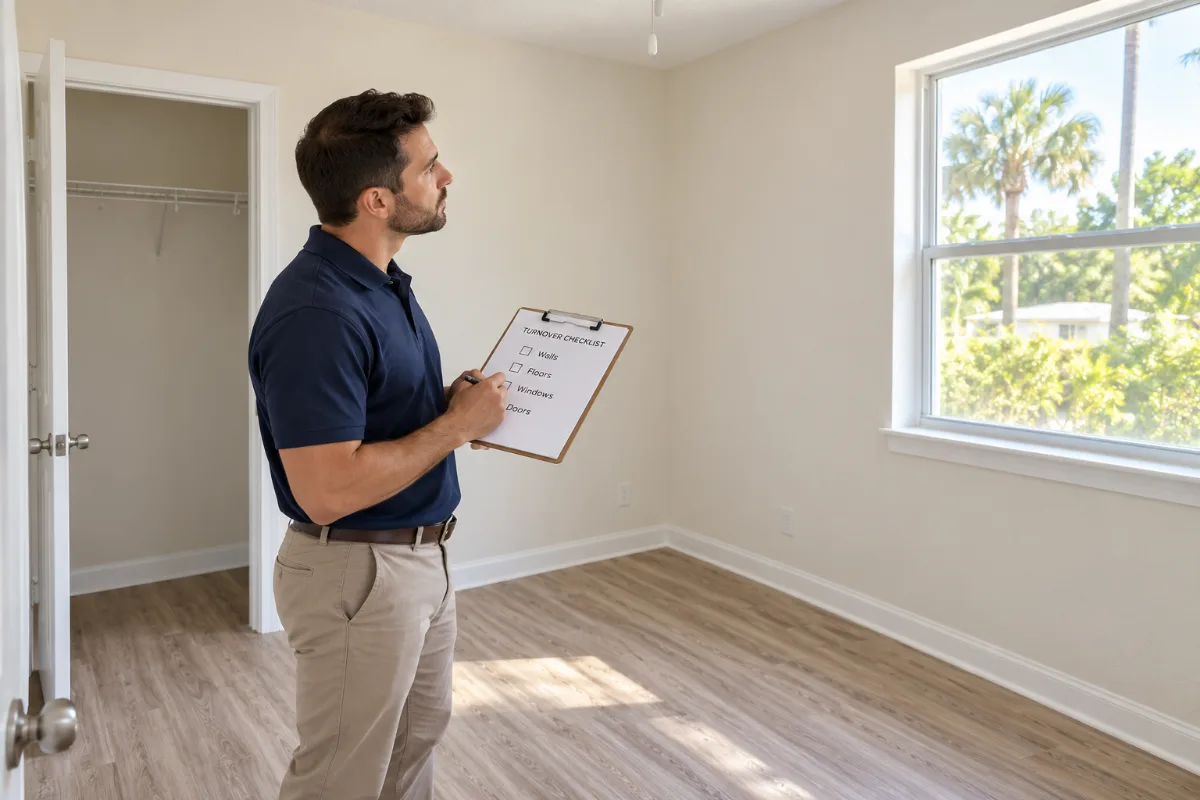
- Conduct a detailed move-in and move-out condition report for every bedroom, not just the unit as a whole, given the number of individual occupants cycling through
- Build a standardized security deposit itemization process that accounts for shared common areas as well as individual bedrooms, strictly compliant with Florida Statute 83.49, security deposit rules
Is a USF Student Rental Worth the Extra Management Effort?
Student housing near USF can deliver strong, predictable annual demand, often with rents supported by multiple incomes (the roommates’ combined contribution) rather than a single tenant’s budget. But it does come with a different operating rhythm: more lease documents per unit, a tighter and more competitive leasing season, and more move-in and move-out inspections to manage on a compressed timeline. Owners who treat it like a standard single family rental, without adjusting their screening, lease structure, and turnover calendar, tend to see more vacancy and more disputes than owners who build a process specifically suited to the academic calendar.
Out Fast Property Management screens tenants and co-signers, structures leases, and manages the academic-calendar turnover cycle for owners renting near USF and across the Tampa Bay area. Browse our available rentals in Tampa Bay or explore our comprehensive Tampa property management services. Check out our owner FAQ to see how a locally based team reduces vacancy and turnover stress.
Disclaimer
This article is provided for general informational purposes only and does not constitute legal advice. Lease structuring, co-signer agreements, occupancy limits, and fair housing compliance involve fact-specific legal requirements, and owners should consult a licensed Florida attorney before finalizing lease terms or screening policies. Statutory and program references in this article are current as of October 2026.
Frequently Asked Questions
What is a co-signer lease and why do most student rentals near USF require one?
A co-signer, sometimes called a guarantor, is an adult, typically a parent, who signs the lease alongside the student tenant and agrees to be financially responsible for the rent and any damage if the student does not pay. Most college students near USF have thin or nonexistent credit and rental history, so a co-signer gives the owner a financially established party to collect from if something goes wrong. The co-signer agreement should be a written addendum with the same joint and several liability language as the main lease, so the owner can pursue either the student or the co-signer, or both, for the full amount owed.
Should each student roommate sign an individual lease or one joint lease?
Both approaches are used near USF, and each has tradeoffs. A single joint lease with joint and several liability means every roommate is responsible for the full rent if one roommate stops paying or moves out, which protects the owner’s cash flow but can create conflict between roommates. Individual leases for each bedroom make each student responsible only for their own portion, which is more tenant-friendly but means the owner has to re-rent that specific room, not the whole unit, if one student leaves. Many experienced student housing owners near USF prefer the joint lease structure specifically because it reduces the risk of a partial vacancy.
How does student rental turnover differ from a typical Tampa Bay rental?
Student rentals near USF overwhelmingly turn over on an academic calendar rather than spread throughout the year, with most leases starting in August and ending in July or early August of the following year. This creates a concentrated leasing season and a concentrated move-out and turnover window, meaning owners need contractors, cleaners, and marketing lined up well before the end of the spring semester rather than reacting after move-out day. It also means a vacancy that happens outside that narrow leasing window can sit empty far longer than a vacancy in a standard year-round rental market.
Can a landlord legally refuse to rent to college students?
A landlord cannot refuse to rent to someone simply because they are a college student, since student status itself is not a protected class, but landlords still must comply with the federal Fair Housing Act and Florida law, which prohibit discrimination based on race, color, national origin, religion, sex, familial status, and disability. Owners can and do apply neutral, consistently enforced screening criteria, such as income-to-rent ratios, credit history, and co-signer requirements, as long as those criteria are applied the same way to every applicant regardless of protected class status.
What lease terms help protect an owner renting to USF students?
Beyond a co-signer requirement, strong student lease addendums near USF typically address occupancy limits that match local code, a clear guest and subletting policy, renters insurance requirements, a detailed move-in condition report, and explicit language on how security deposits are handled at the end of a multi-roommate lease under Florida Statute 83.49. Clear noise and parking policies also matter more in student-heavy rentals than in typical family rentals, since these are among the most common sources of neighbor complaints near campus.
Is it worth using a property manager for a USF-area student rental instead of self-managing?
Many owners find that student rentals require more hands-on management than a typical single family home, simply because of the concentrated leasing season, higher roommate turnover, and the need for consistent screening and co-signer documentation across multiple tenants per unit. A property manager familiar with the USF rental market can run tenant and co-signer screening consistently, enforce occupancy and lease terms, and manage the condensed summer turnover window, which is often the single most stressful period for a self-managing owner.


